Flying
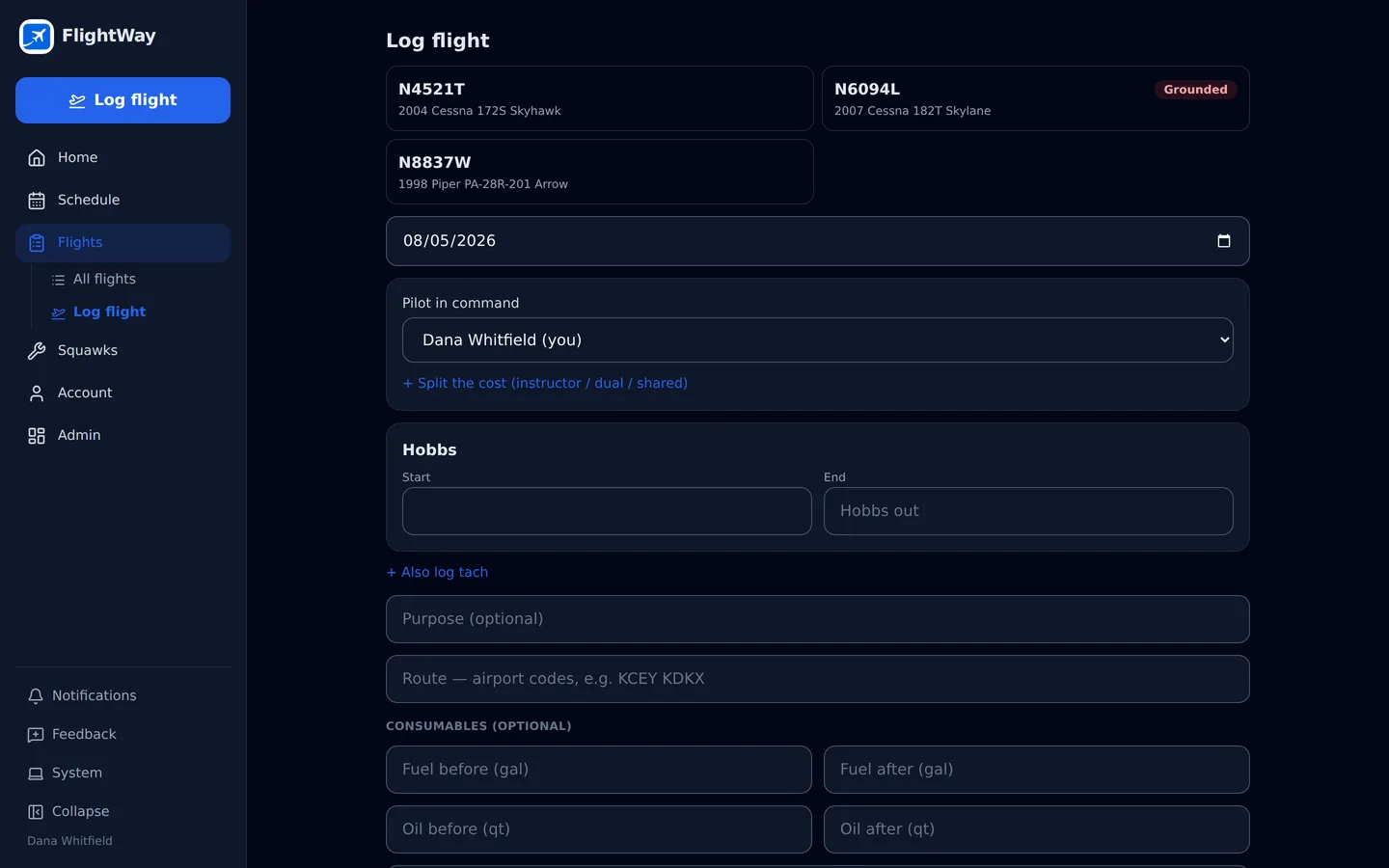
Enter two meter readings. Everything downstream is already done.
A logged flight is where club software either earns its keep or creates a month of tidying up. Here the numbers a pilot reads off the panel are the same numbers that price the flight, credit the hours and post to the books.
Hobbs or tach, on the basis that aircraft bills
Each aircraft carries its own rate and its own basis. A club that bills the Cherokee on tach and the Cub on hobbs sets that once, and neither the pilot nor the treasurer has to remember which is which at the point of entry. If you are still deciding which to use, the trade-off is set out in hobbs or tach.
The charge is calculated from the meters, not typed by a person. That removes the two errors that cause most billing disputes: the wrong rate, and hours worked out in a head or on a phone calculator at the end of a long day.
What else goes in, because it is asked for later
- Route, entered as airport identifiers with a lookup, so cross-country statistics are real rather than a free-text field nobody can total.
- Fuel and oil added, which is how a fuel receipt gets matched to a flight and a member gets credited for buying it.
- Notes, for the thing that is not quite a squawk.
- Who else was aboard, for clubs that split cost across participants.
Logged where there is no signal
A flight logged with no bars is queued on the device and flushed when the phone reconnects, including on the next app open rather than only on a network event. Members should not have to walk to a particular corner of the hangar to file a flight.
Review, if your club wants it
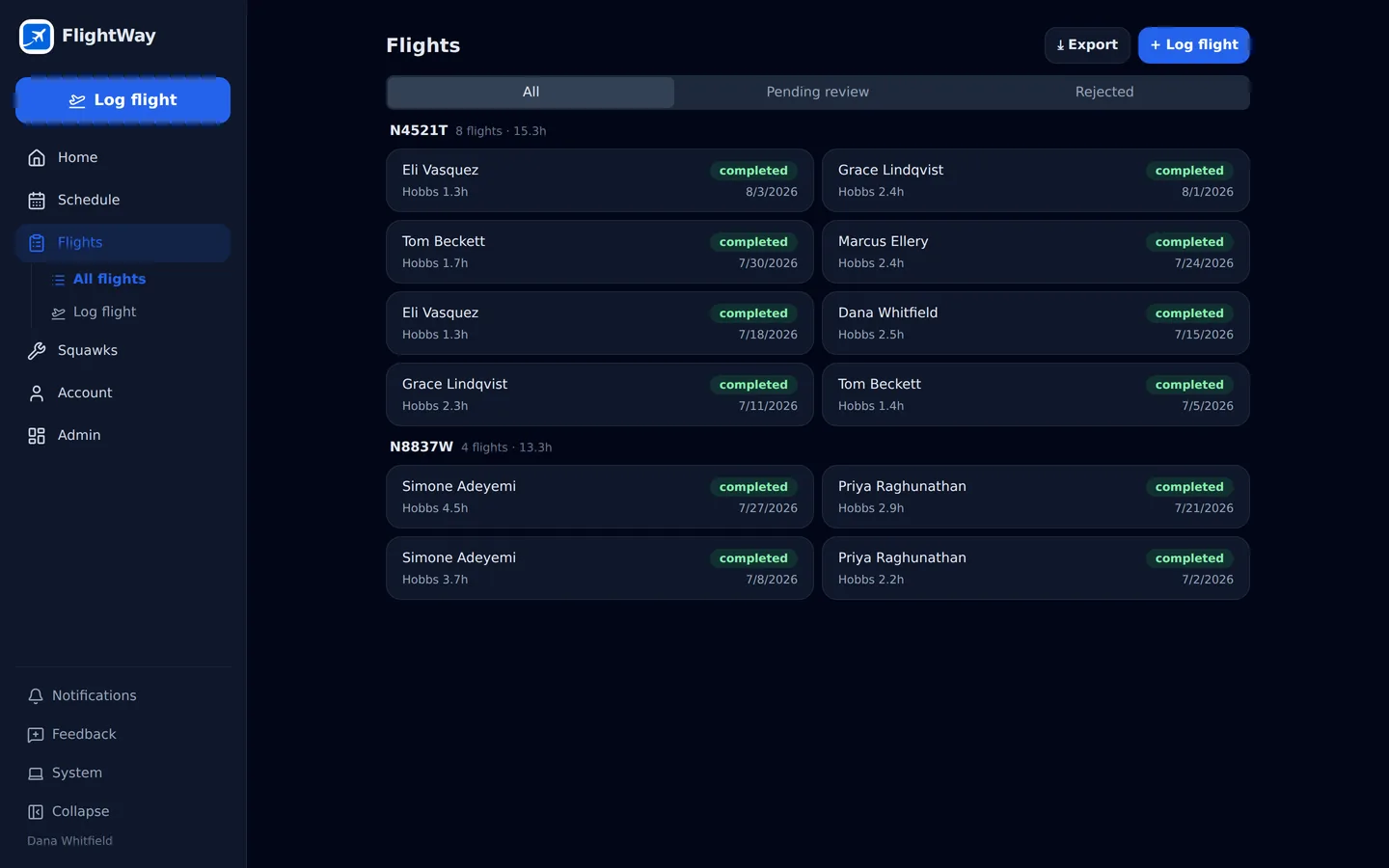
Clubs differ on whether a flight posts straight to the books or waits for a look. Both are supported. With review switched on, flights land in a queue where a treasurer approves or rejects with a reason, and only approved flights post charges. With it off, the charge posts as the flight is filed.
Live position, for the club’s own tail numbers
Aircraft broadcast their position in the clear on ADS-B. FlightWay reads the community receiver networks for the club’s registrations and shows the aeroplane on a map while it is out: altitude, ground speed, track and how old the position is, with the flown track drawn behind it.
It is genuinely useful on the ground. The next member in the booking can see the aeroplane is twenty minutes out instead of ringing round, and an overdue aircraft is visible rather than assumed. It is not a navigation aid and the app says so.
Coverage comes from volunteer receiver networks, so a low aircraft in thin coverage can drop out. FlightWay caches hard, tries more than one network, and fails quietly rather than pretending to know where an aeroplane is.
Hours that mean something afterwards
Because every flight carries hours, aircraft, pilot, route and cost, the totals fall out of the same data: hours by aircraft for the maintenance forecast, hours by member for currency, cross-country percentage, and what the fleet actually cost to fly this year. No separate hours spreadsheet to keep in step.
Last updated 18 August 2026.